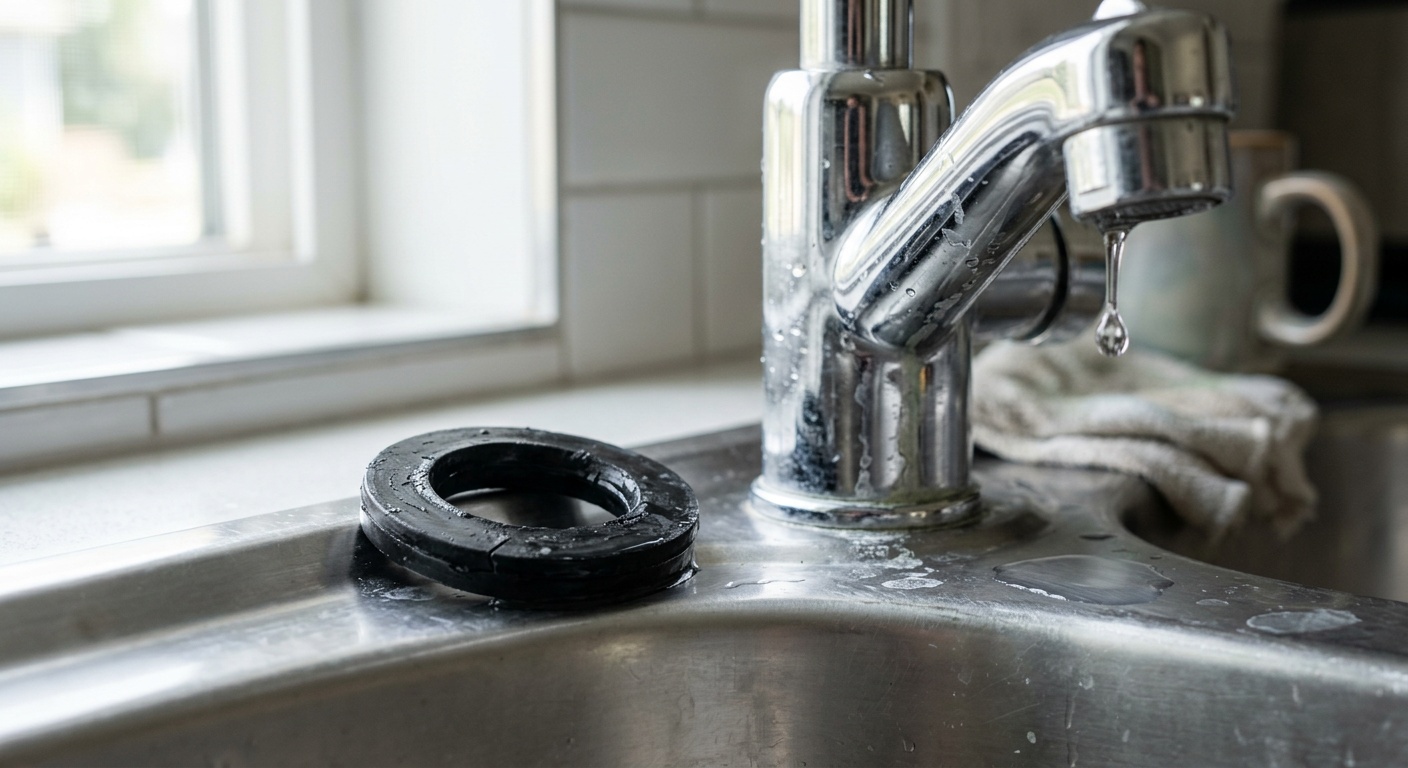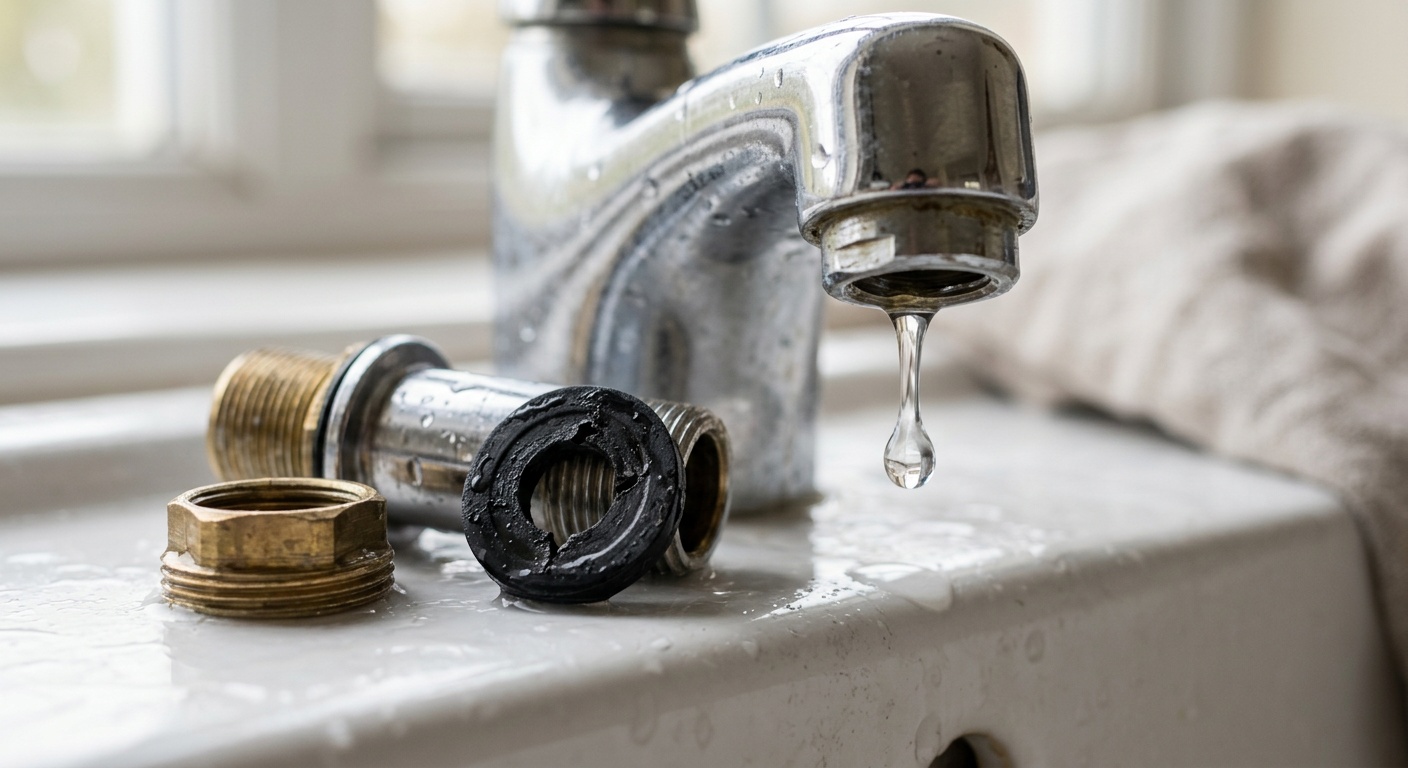
Fixing a Leaky Faucet Washer in Under 30 Minutes
Reading time: 12 minutes
That persistent drip, drip, drip from your bathroom or kitchen faucet isn’t just annoying — it’s quietly draining your wallet and wasting one of our most precious resources. According to the U.S. Environmental Protection Agency’s 2026 WaterSense Report, a single leaky faucet dripping at just one drop per second wastes more than 3,000 gallons of water per year — equivalent to over 180 showers. With water utility rates rising an average of 6.2% across U.S. municipalities in 2026, that slow drip could be costing you an extra $35–$70 annually on your water bill.
Here’s the good news: in most cases, the culprit behind a dripping compression faucet is a worn-out faucet washer — a small rubber disc that costs less than a dollar to replace. And with the right guidance, you can fix it yourself in under 30 minutes, no plumber required.
Well, here’s the straight talk: you don’t need to be a plumbing expert to stop that leak. You just need the right roadmap, the right tools, and the confidence to get started.
Table of Contents
- Why Fixing It Yourself Makes Sense in 2026
- Understanding the Root Cause
- Tools and Materials You’ll Need
- Step-by-Step Repair Guide
- Common Challenges and How to Overcome Them
- Faucet Types at a Glance
- Cost of Ignoring a Leaky Faucet: A Visual Breakdown
- Frequently Asked Questions
- Your Drip-Free Action Plan: Next Steps
Why Fixing It Yourself Makes Sense in 2026
Let’s put this into real-world context. In 2026, the average cost of a plumber’s service call in the United States sits between $150 and $350, depending on your region, just for the first hour of labor. For a faucet washer replacement — a 20-minute job once you know what you’re doing — that’s an enormous markup for something entirely within a homeowner’s capability.
Beyond cost savings, the DIY home repair movement has accelerated dramatically. A 2025 HomeAdvisor Trends Report noted that 67% of homeowners under 45 attempted at least one plumbing repair themselves in the past year, up from 51% in 2022. Online tutorials, smarter tool kits sold at hardware stores, and improved parts availability have all lowered the barrier to entry.
Consider Maria Gonzalez, a homeowner in Austin, Texas, who noticed her kitchen faucet had been dripping every few seconds for months. She’d been putting off the call to a plumber, partly out of cost concerns and partly because she assumed it would be a “big job.” After watching a short video and purchasing a $4 washer replacement kit from her local hardware store, she fixed the leak in 22 minutes. “I felt genuinely empowered,” she said in a 2025 DIY Home Fix Forum post. “It was easier than assembling IKEA furniture.”
The environmental case is equally compelling. With many U.S. states introducing tiered water pricing penalties for excessive household usage in 2026, fixing leaks isn’t just responsible — it’s financially strategic.
Understanding the Root Cause
How a Compression Faucet Actually Works
Before you pick up a wrench, it helps to understand what you’re actually fixing. The most common type of leaky faucet in older homes is the compression faucet — the kind with two separate handles, one for hot and one for cold. When you turn the handle, you’re literally compressing a rubber washer against a metal seat inside the faucet body. Over time, that rubber washer wears down, becomes stiff, or develops small cracks. The result? Water seeps past it even when the faucet is fully closed.
There are actually three primary leak points in a compression faucet:
- The spout tip: Drips when the faucet is off — almost always a worn washer or O-ring
- The handle base: Leaks around the stem — usually a damaged O-ring on the stem
- The body of the faucet: Rare, but can indicate a cracked valve seat
For the classic “drip from the spout” scenario — which accounts for roughly 80% of leaky faucet complaints — replacing the rubber washer at the bottom of the stem is all you need to do.
Identifying Your Faucet Type Before You Start
Not all faucets use washers the same way. While this guide focuses primarily on compression faucets, it’s critical to know what you’re dealing with before diving in. Here’s a quick diagnostic:
- Compression faucet: Two separate handles that you tighten to turn off — most common in homes built before 1990
- Ball faucet: Single handle that moves in an arc over a dome-shaped cap — uses springs and O-rings, no traditional washer
- Cartridge faucet: Single or double handle with a smooth, consistent turn — uses a cartridge, not a flat washer
- Ceramic disc faucet: Single lever over a wide cylindrical body — uses ceramic plates, very durable
If you’re not sure which type you have, look at the handles. Two separate round handles that get harder to turn as they tighten? That’s almost certainly a compression faucet. Perfect — you’re in the right place.
Tools and Materials You’ll Need
One of the best parts about this repair is how minimal the toolkit is. You likely already own most of these items. Here’s your complete shopping and preparation list:
Essential Tools
- Adjustable wrench (or basin wrench for tight spaces)
- Flat-head screwdriver
- Phillips-head screwdriver
- Needle-nose pliers (optional but helpful)
- Utility knife or awl (for removing decorative caps)
- Flashlight or headlamp
- Bucket or towels (to catch residual water)
Materials to Purchase
- Universal washer replacement kit ($3–$6 at any hardware store — includes assorted rubber washers, O-rings, and screws)
- Plumber’s grease (silicone-based) — protects new rubber parts and eases reassembly
- Penetrating oil (like WD-40 or PB Blaster) — if you expect corroded or stubborn parts
- Replacement brass screws (optional, often included in kits)
Pro Tip: Buy a universal washer kit rather than hunting for a specific size. These kits typically contain 20–30 different washer sizes and O-rings for under $6, so you’ll have spares for future repairs. In 2026, brands like Danco and Fluidmaster offer kits specifically labeled for “compression faucet repair” — look for these at Home Depot, Lowe’s, or your local plumbing supply store.
Step-by-Step Repair Guide
Alright — let’s get into the actual repair. Clear some space under the sink, grab your tools, and follow these steps carefully. Total estimated time: 20–30 minutes.
Step 1: Shut Off the Water Supply (2 Minutes)
This is non-negotiable. Locate the shut-off valves under the sink — there should be two (hot and cold), typically with oval handles. Turn them clockwise until snug to stop water flow. If your shut-off valves are stiff or non-functional (common in older homes), you’ll need to shut off the main water supply to the house instead.
Once shut off, open the faucet to release any residual pressure and drain the remaining water in the lines. Place a towel or small bucket under the work area — there will be some residual dripping.
Step 2: Remove the Handle (5 Minutes)
Look for a decorative cap on top of the handle — usually a small plastic or metal disc labeled “H” or “C.” Use a flat-head screwdriver or awl to gently pry it off. Underneath, you’ll find a Phillips-head screw securing the handle to the stem. Remove this screw and pull the handle straight up and off. It may be snug — wiggle it gently side to side while pulling upward. Avoid forcing it to prevent cracking the handle.
Step 3: Remove the Packing Nut (3 Minutes)
With the handle removed, you’ll see a hexagonal packing nut securing the stem assembly inside the faucet body. Use your adjustable wrench to loosen it by turning counterclockwise. Once loose, unscrew it by hand and set it aside. Wrap the jaws of your wrench with electrical tape first if you want to protect chrome or decorative finishes.
Step 4: Extract the Stem (2 Minutes)
Turn the stem counterclockwise (as if you were opening the faucet) to unscrew it from the faucet body. Once fully loose, pull it straight out. This is the key component — at the bottom of the stem, you’ll find the old rubber washer, typically held in place by a small brass screw.
Step 5: Replace the Washer (5 Minutes)
This is the heart of the repair. Examine the old washer: it’s likely hardened, cracked, or visibly worn. Use your flat-head screwdriver to remove the brass retaining screw and peel away the old washer. Now match it to a replacement from your kit — look for the same diameter and thickness. When in doubt, go slightly larger rather than smaller, as rubber compresses.
Apply a thin coat of plumber’s silicone grease to the new washer before installing it. Secure it with the retaining screw — hand-tight plus a quarter turn is sufficient. Over-tightening can crack the new washer immediately.
While you’re here: Inspect the O-rings on the stem body (the rubber rings around the cylindrical stem). If they look cracked or deformed, replace them now — it adds 2 minutes and prevents a future leak.
Step 6: Reassemble and Test (8 Minutes)
Reinsert the stem into the faucet body, turning it clockwise until snug. Reinstall the packing nut and tighten with your wrench — firm but not over-torqued. Replace the handle, tighten the handle screw, and snap the decorative cap back on.
Now the moment of truth: slowly turn the shut-off valves back on, counterclockwise, allowing water pressure to rebuild gradually. Check for leaks around the packing nut and handle base. Then turn the faucet on and off a few times. The dripping should be gone.
Common Challenges and How to Overcome Them
Challenge 1: The Stem Won’t Budge
In older homes — particularly those built before 1985 — mineral buildup and corrosion can effectively cement the stem in place. If turning the stem by hand doesn’t work after removing the packing nut, apply a generous amount of penetrating oil around the base of the stem and wait 10–15 minutes. Then use a wrench on the stem’s hex collar (if present) to assist removal. Never force it violently — you risk cracking the faucet seat.
Real scenario: James Whitaker, a 2025 contributor to the popular DIY forum FixItForum.net, documented his experience with a 1978 compression faucet in his Chicago home where the stem had fused due to 40+ years of calcium deposits. His solution: two rounds of penetrating oil over 20 minutes, plus gentle heat from a hairdryer on the faucet body (never a torch on residential fittings) to expand the metal slightly. It freed on the third attempt.
Challenge 2: You Can’t Match the Washer Size
Sometimes the old washer has deformed so severely that you can’t gauge its original size. In this case, bring the entire stem to the hardware store with you. Most hardware staff can help you match it visually. Alternatively, measure the diameter of the brass washer seat (the recessed cup at the bottom of the stem) — that measurement corresponds directly to the washer size you need. A digital caliper, available for under $15, makes this measurement precise.
Challenge 3: The Leak Persists After Replacement
If the faucet still drips after your washer replacement, don’t panic. There are two likely culprits:
- Damaged valve seat: The metal surface inside the faucet body that the washer presses against may be pitted or corroded. A seat wrench tool ($8–$12) can resurface or remove and replace it.
- Wrong washer size: If the replacement washer is too small, it won’t seal completely. Try the next size up.
If the valve seat is severely damaged, that’s a reasonable time to consider whether a full faucet replacement (typically $40–$150 for a quality unit) makes more financial sense than continued repairs on a 30+ year-old fixture.
Faucet Types at a Glance
| Faucet Type | Repair Part | DIY Difficulty | Avg. Part Cost (2026) | Typical Repair Time |
|---|---|---|---|---|
| Compression | Rubber washer / O-ring | ⭐ Easy | $1–$6 | 20–30 min |
| Ball | Ball, springs, seats, O-rings | ⭐⭐ Moderate | $10–$20 | 30–45 min |
| Cartridge | Cartridge assembly | ⭐⭐ Moderate | $8–$25 | 25–40 min |
| Ceramic Disc | Ceramic disc cylinder | ⭐⭐⭐ Moderate-Hard | $20–$50 | 30–60 min |
Cost of Ignoring a Leaky Faucet: A Visual Breakdown
Here’s what that persistent drip actually costs you over time, based on 2026 average U.S. water rates of $0.0065 per gallon and a standard drip rate of one drop per second:
Based on 2026 U.S. average municipal water rates. Does not account for hot water energy costs or tiered pricing penalties in drought-affected states.
The takeaway is stark: a $4 washer replacement today could save you nearly $100 in water costs over five years — before accounting for the avoided risk of water damage to your cabinet, flooring, and substructure. In states like California, Arizona, and Nevada, where 2026 tiered water pricing imposes additional fees on households exceeding usage thresholds, the savings could be meaningfully higher.
Frequently Asked Questions
How do I know if my faucet needs a washer replacement or a full faucet replacement?
If your faucet is a compression type and the drip is coming from the spout when the tap is off, a washer replacement is almost always sufficient — and the right first step. However, if the faucet is more than 25–30 years old, if the valve seat is visibly pitted or corroded, if there are cracks in the faucet body, or if leaks persist after two rounds of washer replacement, it’s time to consider a full unit replacement. In 2026, quality mid-range faucets from brands like Moen, Delta, and Kohler start at around $45–$80 and come with lifetime warranties — often better value than repeatedly patching an aging fixture.
Can I fix a leaky faucet without turning off the main water supply?
Yes — in most cases, if your under-sink shut-off valves are functioning properly, you only need to close those. Turn them fully clockwise and test by opening the faucet; if water stops flowing, you’re good to proceed without touching the main supply. However, if your under-sink valves are corroded, stripped, or don’t fully stop the water flow — which is common in homes older than 20 years — you’ll need to use the main supply shut-off. It’s a good habit to test your shut-off valves periodically as part of annual home maintenance.
What if I accidentally damage the faucet seat during the repair?
A damaged valve seat — the recessed metal ring inside the faucet body that the washer presses against — is a repairable problem, but requires one additional tool: a seat wrench (also called a seat dresser). This inexpensive tool ($8–$15) either removes and replaces a removable seat or, if the seat is non-removable, grinds it smooth so a new washer can seal against it properly. If the seat is severely damaged or the faucet body itself is cracked during removal of a stuck component, that’s the point at which full faucet replacement becomes the most practical and cost-effective path forward.
Your Drip-Free Action Plan: Next Steps
You now have everything you need to tackle that leaky faucet today — not next month, not after the next plumber’s appointment. Here’s your practical, immediate roadmap:
- Step 1 — Diagnose first: Walk to your leaking faucet right now and confirm it’s a compression type (two separate tightening handles). If yes, you’re ready.
- Step 2 — Assemble your kit: Pick up a universal washer replacement kit and a tube of plumber’s silicone grease from your nearest hardware store. Total cost: under $10.
- Step 3 — Schedule your 30 minutes: Block out the time this weekend — early morning before the household is active is ideal so you can shut off water without inconvenience.
- Step 4 — Follow the steps, document as you go: Take photos with your phone at each disassembly step — this creates a reference for reassembly and helps if you need to ask for advice online.
- Step 5 — Test thoroughly and inspect surroundings: After the fix, run both hot and cold, check under the sink for any moisture, and dry the cabinet interior if any water accumulated during the repair.
In a broader context, small home repairs like this one connect to a much larger trend gaining traction in 2026: the sustainable home maintenance movement, where homeowners proactively address minor issues to reduce both financial waste and environmental impact. The EPA estimates that if every U.S. household fixed just its easily corrected water leaks, the country would save more than 1 trillion gallons of water annually — enough to supply more than 11 million homes for an entire year.
So here’s the real question worth sitting with: How many small, fixable problems in your home are quietly costing you money and resources simply because they haven’t felt urgent enough to address? That leaky washer is a perfect starting point — not just because of what you’ll save, but because of the confidence and competence you’ll build by solving it yourself. Your home is your biggest investment. Treat every 30-minute repair as part of your long-term strategy to protect and optimize it.